
Outdoor weddings, backyard receptions and venue events all share one unglamorous detail that decides more about the guest experience than anyone expects: the restrooms. The good news is that a modern restroom trailer is a long way from a basic porta potty. Here is how to plan restrooms that fit the day. Ready now? See our wedding restrooms or request a quote.
Why Weddings Call for an Upgrade
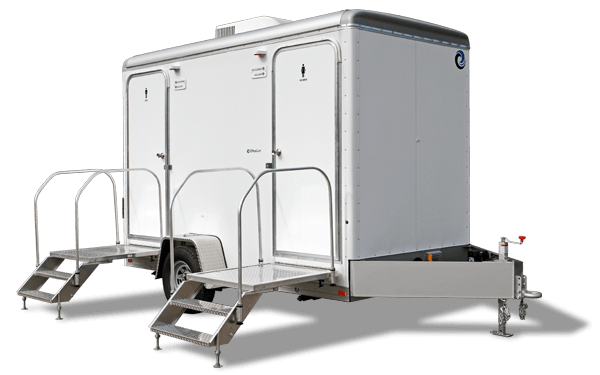
Guests are dressed up, the day runs long and photographs are everywhere. A luxury restroom trailer brings flushing toilets, running-water sinks, climate control, vanities and real lighting — comfort that matches the occasion rather than clashing with it.
The practical difference is the length of the day. A wedding is not a four-hour event for the restrooms; it starts with vendors and setup in the morning and finishes with a bar that has been running for hours. That is a much heavier duty cycle than the guest count alone suggests.
Trailer or Standard Units
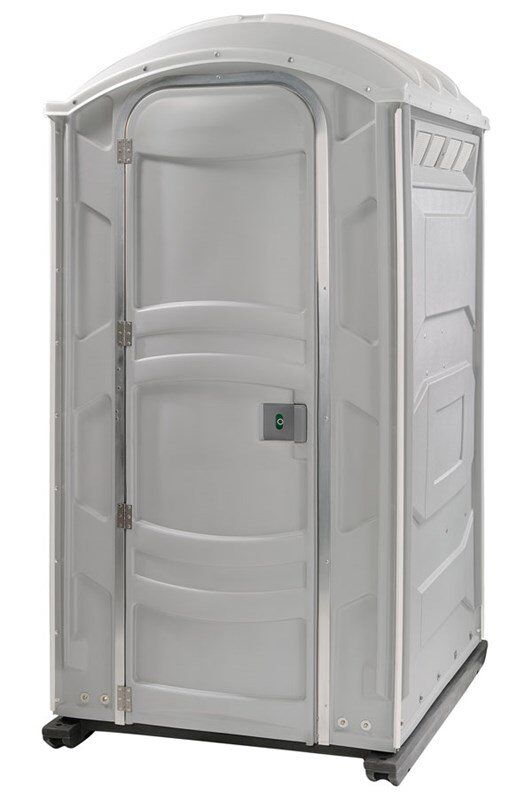
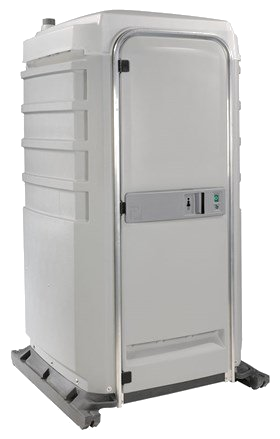
For an upscale reception a restroom trailer is usually worth it. For a casual or budget-conscious celebration, flushable units paired with a hand-washing station do the job well. Our trailer versus porta potty comparison breaks the choice down in detail.
There is a middle option people miss: a trailer for guests and standard units for vendors, catering and the setup crew. It keeps the trailer in good condition for the part of the day that matters and usually costs less than adding a second trailer.
How Many Restrooms for a Wedding
Start with one unit or trailer stall per fifty guests, then adjust for the two things that actually move the number.
How long the day runs. The standard planning baseline works in four-hour blocks. A ceremony and a two-hour drinks reception is one thing; a day that starts at two and ends at midnight is close to double that, with the same guest list.
Whether there is an open bar. Add roughly fifteen to twenty percent where alcohol is served throughout. This is the single most common under-estimate in wedding restroom planning.
Our how many do you need guide has the full chart. If your numbers sit near the top of what a unit size covers, book the next size up — running at capacity for the last three hours is what people remember.
Placement and Site Access
- Position units close enough to be convenient but out of the sightlines of the ceremony and the photographs.
- Confirm level ground and truck access with your venue ahead of time. Trailers need room to be delivered, maneuvered and leveled.
- Check what the venue can supply. Larger trailers run from site water and power; some carry their own tanks. This is the question that most often changes which unit we recommend.
- Think about the route after dark. A path that works at four in the afternoon can be unusable at ten at night without lighting.
- Book early. Wedding-season weekends fill months ahead, trailers first.
Hand-Washing and Accessibility
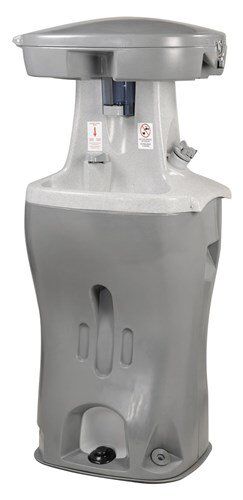
Add hand-washing stations near catering — trailers have sinks on board, standard units do not. Include an ADA-accessible option so every guest is covered, and place it on firm, level ground with a clear route to it. An accessible unit at the bottom of a grass slope is not accessible in any way that matters.
What It Costs
Restroom trailers start from $1,000, and standard units start around $150 to $175 per weekend with deluxe and flushable units between $200 and $425. What moves the number is how long you keep the units, how far we are driving and how often they are serviced. The full pricing guide covers it, and a quote with your date, venue address and guest count will be accurate rather than indicative.
Frequently Asked Questions
How many restrooms do I need for a 150-guest wedding?
Three stalls is a reasonable starting point for an event of ordinary length, and four if the day runs long or there is a bar running throughout. A single four-stall trailer covers most 150-guest weddings comfortably.
Do restroom trailers need power and water?
It depends on the unit. Smaller trailers carry their own fresh water tank and need a standard power supply. Larger ones are built to run from site water and power. Tell us what the venue can supply and it changes what we recommend more than the guest count does.
How far in advance should I book?
Three to six months for a peak-season Saturday, and earlier for a specific trailer or an unusual venue. Trailers are the first thing to be committed.
Can a trailer be delivered onto grass?
Usually, depending on recent weather, how firm the ground is and the approach. Flag the surface when you request a quote so it can be planned for rather than discovered on the morning.
What about the vendors and the setup crew?
Worth planning for separately. Vendors are on site for hours before guests arrive, and a standard unit for the crew keeps the trailer in the condition you are paying for.
Can we have the trailer for more than one day?
Yes, and it is common where setup runs the day before or guests stay on site. Multi-day bookings include scheduled servicing, which we build into the quote.