
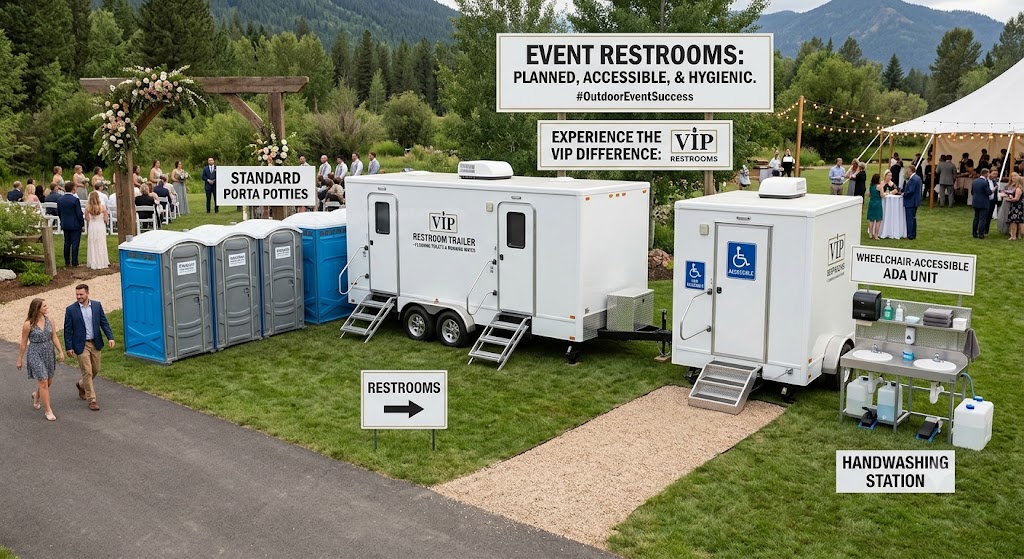
Restrooms are rarely the exciting part of an outdoor event, but they are often the part guests remember. A long line, a unit tucked away in the dark, or a sink on the far side of the property can overshadow great food and music.
Getting it right takes more than picking a number. You need to think about unit type, placement, truck access, accessibility, handwashing, permits, and timing. Here is what to plan before you book.
Start With the Right Number of Units
The Basic Guideline
A common starting point is about one standard porta potty per 50 guests for a 3-4 hour event. A 100-guest party would start at two units, and a 150-guest event at three.
When to Add More
That number is a floor, not a target. Plan for extra units when:
- The event runs longer than four hours
- Alcohol or a full meal is served
- There are no permanent restrooms nearby
- The crowd arrives or leaves all at once
- The site is large or spread out
Restroom demand comes in waves, usually after dinner, between performances, or just before guests leave. Plan for your busiest moment, not the average one. Our porta potty planning guide walks through the numbers in more detail.
Choose the Right Type of Unit
Standard and Deluxe Sink Units
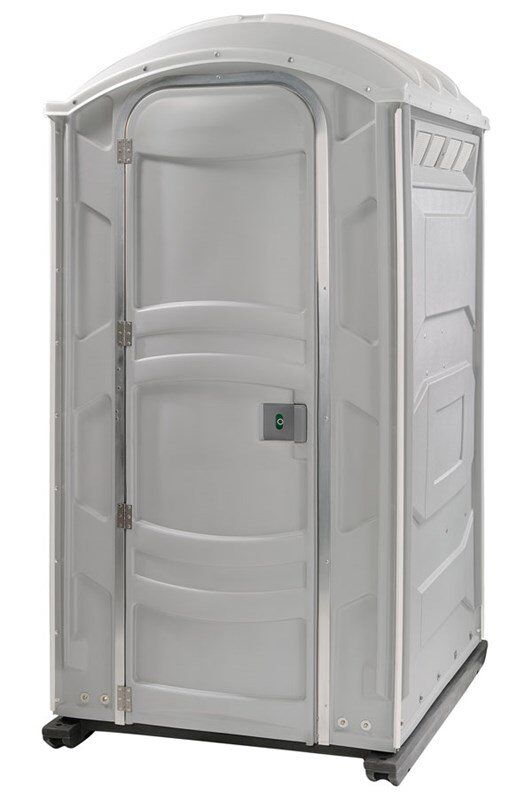
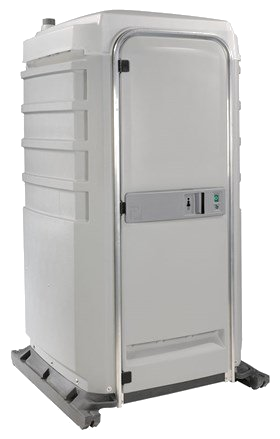
Standard porta potties are the practical choice for casual events, festivals, and races. A deluxe sink unit adds a foot-pump sink and urinal in the same footprint, which helps when food is involved.
Flushable Units
Flushable porta potties have a flushing toilet, a fresh-water sink, and a roomier feel. They suit weddings, corporate events, and upscale parties where guests expect a more familiar restroom.
Restroom Trailers
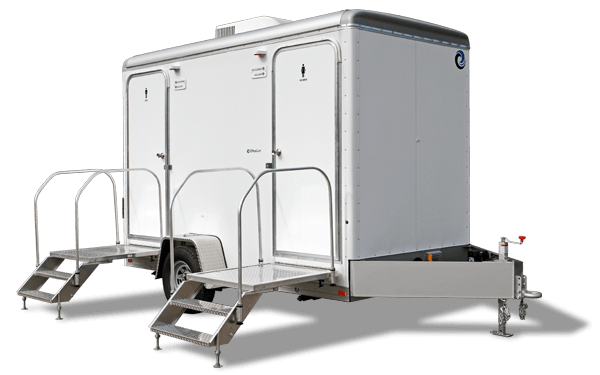
For formal events, a restroom trailer offers private stalls, running water, and often climate control. A good guideline is one stall per 50-75 guests. Trailers need level ground, room for the tow vehicle, power, and either a water hookup or an onboard tank, so confirm site conditions early.
You can also mix types. Many planners use standard units for most guests and a flushable unit or trailer near the ceremony, VIP area, or hospitality tent.
Plan Placement and Delivery Access
Ground and Layout
Units need firm, reasonably level ground. Avoid slopes, soft soil, and low spots where rainwater collects. Then think about how guests will move:
- Place units close enough to be convenient, but away from dining tables, ceremony seating, and food prep.
- At larger sites, use several smaller clusters instead of one distant bank. It cuts walking time and spreads out traffic.
- Add clear signs so guests can find the restrooms easily.
Truck Access
The plan has to work for the service truck as well as your guests. The truck needs room to enter, reach the units, and leave without driving through a crowd. Locked gates, parked vendor vehicles, low branches, tents, and narrow paths can all block delivery and servicing.
Standard units are light enough to reposition if the layout changes, but that is easier before guests arrive. Send us your address and a site description, and we will confirm access before your date.
Don’t Forget Accessibility
Accessible restrooms should be usable from the route leading to them. A wheelchair-accessible unit placed on soft ground, up a slope, or behind the rest of the bank is not accessible in practice.
Public events and permitted venues often set their own minimum number of accessible units, so check your venue rules and event permit. Options include standalone wheelchair-accessible restrooms and ADA-compliant trailers with an accessible stall. Place accessible units on firm, level ground along the main path.
Plan for Handwashing, Lighting, and Servicing
Handwashing
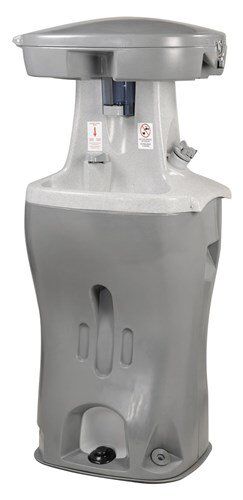
Hand sanitizer alone is not always enough. Events with food vendors, children, or long stays benefit from handwashing stations with fresh water and foot-pump operation. Most permit-issuing jurisdictions require them for food-service events. Stations typically run $150-$250.
Lighting and Signage
If your event runs past sunset, guests need to see the path, door, and lock. Plan lighting and signage in advance, and keep extension cords away from walkways.
Supplies and Servicing
Units arrive stocked and clean, but a long or busy event may need a mid-event service. Heat, humidity, and heavy traffic all shorten service intervals. Assign someone from your team to check the restroom area periodically for low supplies, spills, or lines.
Check Permits and Venue Rules
You usually do not need a permit just to rent a porta potty, but your event or the placement location might. Public parks, streets, fairgrounds, and municipal property often have their own rules on restroom counts, accessibility, and handwashing.
Ask your venue manager or local permitting office early. Private property is often simpler, though homeowner association or landlord rules may still apply. Permits in some public locations can add to your total cost, so it is worth checking before you finalize your order.
Consider Weather and Timing
Rain can turn a good placement area into mud, and heat makes odors more noticeable. Tell us about your site and the season so we can plan the right servicing schedule. A schedule that works in spring may not hold up in August.
Timing matters for availability too. For weekends and peak season, reserve one to two weeks ahead for standard units and four or more weeks for restroom trailers or large orders.
What Will It Cost?
Typical weekend or event pricing through VIP Restrooms looks like this:
- Standard porta potty: $150-$325
- Deluxe sink porta potty: $175-$375
- Flushable porta potty: $200-$425
- Luxury restroom trailer: from about $1,000
Your final price depends on location, unit count, duration, and servicing. The base rental covers delivery, setup, pickup, standard cleaning, and restocking, while extras like additional pump-outs, ADA units, rush delivery, or long-distance delivery can add to the total. See our rental price chart for details.
Outdoor Event Restroom Checklist
- Confirm guest count, event hours, and whether alcohol or food will be served
- Choose unit types that match your guests and event style
- Include at least one accessible option, and check venue requirements
- Map out placement on firm, level ground with clear truck access
- Add handwashing stations, lighting, and signage
- Check permits and venue rules
- Book early, and confirm the delivery window and a backup contact
Outdoor Event Porta Potty FAQs
How many porta potties do I need for 100 guests?
Two standard units is a common starting point for a 3-4 hour event. Add a third if alcohol is served, the event runs longer, or there are no other restrooms nearby.
How far in advance should I book?
One to two weeks ahead for standard units in peak season, and four or more weeks for trailers or large orders.
Do I need a handwashing station?
It is strongly recommended for events with food and large crowds, and often required for food-service events. Check with your venue or local permitting office.
Can you deliver to any outdoor location?
Usually, as long as a service truck can reach the site and the ground is firm and reasonably level. Tell us about the location and we will confirm before your date.
Get a Free Outdoor Event Quote
VIP Restrooms provides nationwide porta potty, restroom trailer, and handwashing station rentals with one point of contact and one invoice. Send us your address, date, and guest count, and we will recommend the right setup. Request a free quote or call (888) 437-0062.