

Under OSHA’s construction sanitation standard (29 CFR 1926.51), a jobsite with 20 or fewer workers needs at least 1 toilet. Sites with more than 20 workers need 1 toilet seat and 1 urinal per 40 workers, and sites with 200 or more workers need 1 toilet seat and 1 urinal per 50 workers. In practice, most contractors plan for about one porta potty per 10 workers on a 40-hour week with weekly servicing.
That’s the short answer. The OSHA table is the legal minimum, not a service plan, so the number that actually keeps your crew productive depends on shift length, servicing frequency, site layout, and who’s on your crew. Here’s how to get it right.
OSHA Construction Toilet Requirements at a Glance
| Number of Workers on Site | OSHA Minimum Toilet Facilities (Table D-1) |
|---|---|
| 20 or fewer | 1 toilet |
| 20 or more | 1 toilet seat and 1 urinal per 40 workers |
| 200 or more | 1 toilet seat and 1 urinal per 50 workers |
Source: OSHA 29 CFR 1926.51(c)(1), Table D-1. Always check for stricter state or local rules, especially in states that run their own OSHA-approved safety programs. For a broader overview, see our guide to OSHA sanitation requirements.
OSHA Minimum vs. Real-World Planning
This is where many contractors get caught out. OSHA tells you the minimum number of facilities you must provide. It doesn’t tell you how many units you need to keep them clean and usable all week.
That matters because OSHA has stated in an official interpretation letter that toilets in an unsanitary condition do not count toward the required minimum. A single unit that’s overflowing by Wednesday isn’t compliant, even if the count on paper looks right.
That’s why the portable sanitation industry plans by usage and service frequency, not just by the OSHA table. A standard unit has a limited holding tank, so more workers, longer shifts, or less frequent pumping all mean you need more units.
Common Planning Guideline: 1 Unit per 10 Workers
For a typical 40-hour work week with weekly servicing, one standard porta potty per 10 workers is the widely used industry guideline. Adjust up or down from there:
- Longer shifts or 6-7 day weeks: add units or increase servicing.
- Twice-weekly servicing: you may be able to support more workers per unit.
- Hot weather: crews drink more water, so usage goes up.
- Large or spread-out sites: you may need extra units simply to keep restrooms close to where people work.
How Many Porta Potties by Crew Size
| Workers on Site | OSHA Minimum | Recommended Units (40-hr week, weekly service) |
|---|---|---|
| 1-10 | 1 toilet | 1 unit |
| 11-20 | 1 toilet | 2 units |
| 25 | 1 toilet seat + 1 urinal | 3 units |
| 50 | 2 toilet seats + 2 urinals | 5 units |
| 100 | 3 toilet seats + 3 urinals | 10 units |
| 200 | 4 toilet seats + 4 urinals | 20 units |
The recommended column assumes standard units serviced once a week. Your actual needs depend on your schedule and site conditions, so treat this as a starting point for your quote, not a final number. For event-based sizing, see our porta potty planning guide.
Other OSHA Sanitation Rules Contractors Should Know
Toilets Must Be Kept Sanitary
As noted above, a dirty or unusable toilet doesn’t count toward your minimum. A reliable servicing schedule is part of compliance, not an optional extra.
Restrooms Must Be Readily Accessible
Workers need to be able to reach a restroom promptly, without long walks or unreasonable restrictions on when they can go. On large sites, that often means spreading units out rather than grouping them all at the site entrance.
The Mobile Crew Exception
OSHA’s toilet requirements don’t apply to mobile crews that have transportation readily available to nearby toilet facilities. OSHA’s interpretation limits this to crews that move from jobsite to jobsite on a daily or hourly basis, such as some road or utility crews. Workers who report to the same project for days, weeks, or longer are not a mobile crew and need on-site facilities.
Sites Without Sewer Access
Where a jobsite doesn’t have a sanitary sewer, OSHA permits options such as chemical toilets and recirculating toilets unless local codes prohibit them. This is why portable restrooms are the standard solution on most active construction sites.
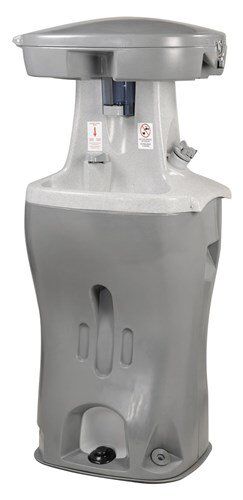
Handwashing Facilities
OSHA requires adequate washing facilities near the worksite when crews apply paints, coatings, herbicides, insecticides, or work with other harmful contaminants. Even when it isn’t strictly required, a hand-washing station or a deluxe sink porta potty is one of the easiest ways to improve jobsite hygiene and reduce the spread of illness through your crew.
Factors That Change How Many Units You Need
Peak headcount, not average. Plan for the most workers on site at any one time. If framing, electrical, and plumbing crews overlap during a busy phase, your restroom count should reflect that peak, then scale back later.
Shift length and work days. A 10-hour day or Saturday work adds usage fast. Longer weeks need either more units or more frequent servicing.
Service frequency. Weekly servicing is standard for construction, but busy or high-heat sites often benefit from twice-weekly pumping. Sometimes adding a service visit is cheaper than adding units.
Site size and layout. On a large commercial site or multi-building project, place units near active work zones so workers aren’t losing time walking across the site. Our porta potty placement guide covers where units should go and how to keep them accessible for service trucks.
Mixed crews. Single-occupancy units with locking doors give every worker privacy. On larger sites, many contractors dedicate specific units to women on the crew, which improves comfort and cleanliness.
Accessibility. If any workers, inspectors, or visitors need an accessible restroom, include at least one ADA-accessible portable toilet.
Which Porta Potty Type Works Best on a Jobsite?
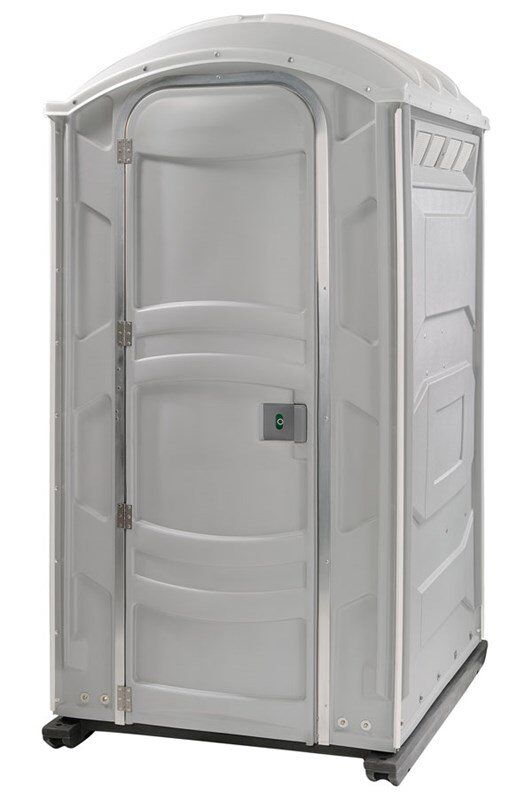
Standard Porta Potty
The workhorse of construction sanitation. Durable, easy to service, and cost-effective for crews of any size.
Best choice when: You need reliable, compliant restrooms at the lowest practical cost.
Deluxe Sink Porta Potty
Adds a built-in handwashing sink, soap, and paper towels in the same unit.
Best choice when: You want handwashing at the point of use without adding a separate station.
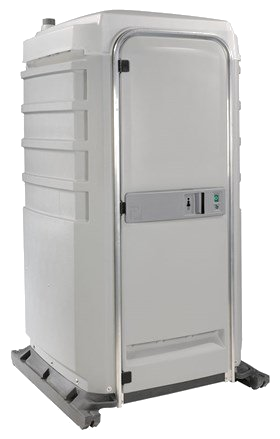
Flushable Porta Potty
A more comfortable option with a foot-pump flush and fresh-water sink.
Best choice when: You’re providing restrooms for site offices, supervisors, or client walkthroughs. See our flushable portable toilets.
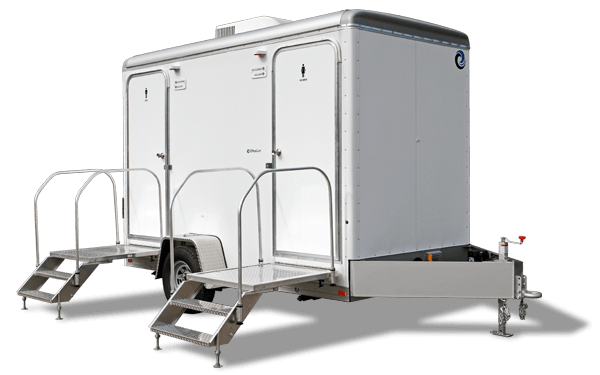
Restroom Trailers
Multiple stalls, running water, and lighting in a single unit.
Best choice when: You have a long-term project, a large crew, or a site office where a higher standard is expected. Explore our restroom trailers.
Common Mistakes to Avoid
- Using the OSHA minimum as your order quantity. It’s a floor, not a service plan.
- Sizing for average headcount. Peak phases are when restrooms fail.
- Skipping servicing to save money. Unsanitary units don’t count toward compliance.
- Placing every unit at the gate. Distance costs your crew time.
- Forgetting handwashing. Especially on sites with paints, coatings, or chemicals.
- Not adjusting as the project changes. Add or remove units as crews ramp up or wind down.
Frequently Asked Questions
How many porta potties does OSHA require for 10 workers?
OSHA requires at least 1 toilet for 20 or fewer workers, so 10 workers need a minimum of 1. With weekly servicing on a standard 40-hour week, 1 unit is usually enough.
How many porta potties do I need for 50 workers?
OSHA’s minimum is 2 toilet seats and 2 urinals. For practical use with weekly servicing, most sites plan for around 5 standard units.
Does a porta potty count as a toilet under OSHA?
Yes. OSHA allows chemical toilets on jobsites without a sanitary sewer, unless local codes prohibit them. The units must be kept in sanitary condition to count.
How often should construction porta potties be serviced?
Weekly servicing is standard for most construction sites. Sites with large crews, long shifts, or hot weather often need servicing twice a week.
Do construction sites need handwashing stations?
OSHA requires washing facilities near the worksite when workers handle paints, coatings, herbicides, insecticides, or other harmful contaminants. They’re strongly recommended on every site for general hygiene.
Do state rules differ from federal OSHA?
They can. Some states run their own OSHA-approved plans with rules that are equal to or stricter than federal standards, and local codes may add requirements. See our guide to construction site bathroom regulations by state.
Questions to Ask Before You Rent
- What is my peak number of workers on site at one time?
- How many hours per day and days per week will crews work?
- How often will the units be serviced, and is restocking included?
- Where should units be placed, and can a service truck reach them?
- Do I need handwashing stations or sink units?
- Do I need an ADA-accessible unit?
- Is there a long-term rate for my project length?
So, How Many Porta Potties Do You Need on a Construction Site?
To meet OSHA’s minimum:
- 1 toilet for 20 or fewer workers
- 1 toilet seat and 1 urinal per 40 workers for 20 or more workers
- 1 toilet seat and 1 urinal per 50 workers for 200 or more workers
To keep your site clean and your crew productive, plan for roughly one standard unit per 10 workers on a 40-hour week with weekly servicing, then adjust for shift length, heat, site size, and handwashing needs.
Need help sizing your jobsite? VIP Restrooms provides nationwide construction porta potty rentals with scheduled servicing, handwashing stations, and long-term pricing. Request a Free Construction Restroom Quote or call (888) 437-0062.