
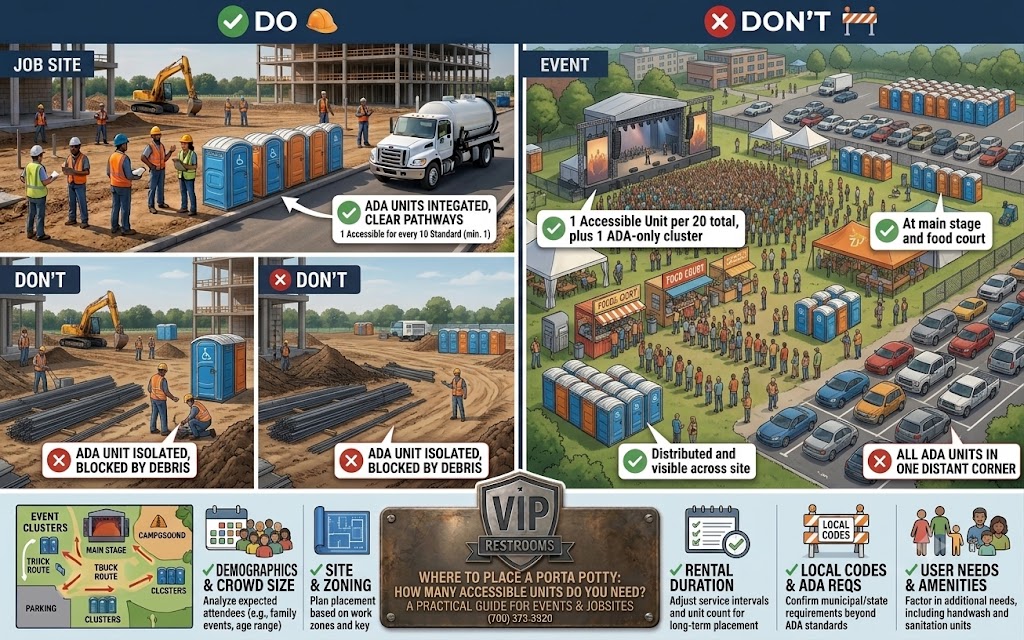
Under the 2010 ADA Standards for Accessible Design, when portable toilets are grouped together, at least 5 percent of the units in each cluster, and no fewer than one, must be accessible. Portable toilets used only by construction workers on an active construction site are exempt.
That’s the short answer. Accessible restrooms are easy to overlook when planning an event or jobsite, but they matter for guests, workers, and your legal risk. Here’s how many accessible units you need, when construction sites are exempt, and what makes a unit truly ADA-compliant.
ADA Portable Toilet Requirements at a Glance
| Requirement | What the ADA Says |
|---|---|
| Minimum accessible units | At least 5% of units in each cluster, and no fewer than 1 |
| How it’s counted | Per cluster (each restroom bank), not per site |
| Signage | International Symbol of Accessibility on each accessible unit |
| Construction sites | Exempt when units are used only by construction personnel |
| Temporary events | Covered, including festivals, fairs, and outdoor events |
Source: 2010 ADA Standards for Accessible Design, Section 213.2, Exception 3. Always check for stricter state or local rules.
What the ADA Says About Portable Toilets
The rule comes from Section 213.2, Exception 3, of the 2010 ADA Standards. The U.S. Access Board confirms that it applies to temporary events as well as permanent sites. Three key points:
- The 5 percent rule: At least 5 percent of portable units in each cluster must be accessible, with a minimum of one.
- Per cluster, not per site: A cluster is a group of units within sight of, or next to, one another. If you place three restroom banks around a venue, each bank needs its own accessible unit.
- Clear signage: Accessible units must display the International Symbol of Accessibility (the wheelchair symbol).
How Many ADA Units Do You Need?
Because 5 percent rarely comes out to a whole number, round up. Here is how that works for a single cluster:
| Standard Units in Cluster | Minimum ADA Units |
|---|---|
| 1-20 | 1 |
| 21-40 | 2 |
| 41-60 | 3 |
| 61-80 | 4 |
| 81-100 | 5 |
Example: A 2,000-Guest Festival
Say your festival needs 40 portable toilets, split into two banks of 20. Because the rule applies per cluster, each bank of 20 needs 1 accessible unit, for 2 in total. If you split the same 40 units into four banks of 10, you would need 4 accessible units, one per bank. For help sizing the rest of your setup, see our porta potty planning guide.
Do Construction Sites Need ADA Portable Toilets?
Not always. The ADA Standards exempt portable toilets provided exclusively for construction personnel on a construction site. Many states and cities follow the same exemption.
However, the exemption is narrow. It does not cover:
- Public or client areas such as sales offices and model homes.
- Visitor use on sites where inspectors, owners, or visitors regularly use the restrooms.
- Workers with disabilities who may need a reasonable accommodation from their employer.
Because of this, many contractors keep at least one wheelchair-accessible unit on larger projects. It also doubles as a roomier option for workers carrying tools or wearing heavy gear. For full jobsite planning, see our guide on how many porta potties you need on a construction site.
What Makes a Portable Toilet ADA-Compliant?
An ADA unit is much more than a larger standard porta potty. Accessible portable units must meet the same technical requirements as permanent accessible toilet rooms, including:
- Ground-level entry: A level or ramped entrance with no step up.
- Wide door: Enough clear width for a wheelchair to pass through easily.
- Turning space: Room inside for a wheelchair to turn around, typically a 60-inch diameter circle.
- Grab bars: Securely mounted bars beside and behind the toilet.
- Correct seat height: A toilet seat between 17 and 19 inches from the floor.
- Reachable features: Door hardware, toilet paper, and dispensers placed within reach from a seated position.
Placement Matters as Much as Quantity
An accessible unit only helps if people can reach it.
Firm, level ground. Set the unit on stable ground, not on soft grass, sand, loose gravel, or a slope.
A clear path. Make sure the route from parking, seating, or work areas is smooth and free of cables, curbs, and obstacles.
Keep it with the cluster. Place the ADA unit with the other restrooms rather than isolating it in a far corner.
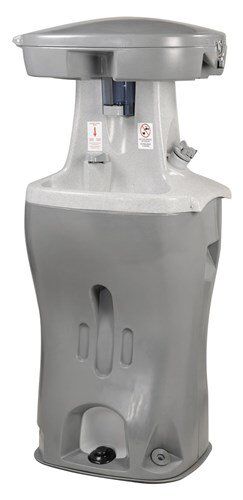
Accessible handwashing. Add an accessible hand washing station nearby so guests can wash up independently.
For more on layout, read our porta potty placement guide.
When to Go Above the 5 Percent Minimum
The 5 percent rule is a floor, not a target. Consider adding more accessible units for:
- Weddings, reunions, and community events with many older guests.
- Marathons, charity walks, and events with medical or first-aid areas.
- Family events where parents need room for strollers or to help young children.
- Veterans’ events and disability-focused gatherings.
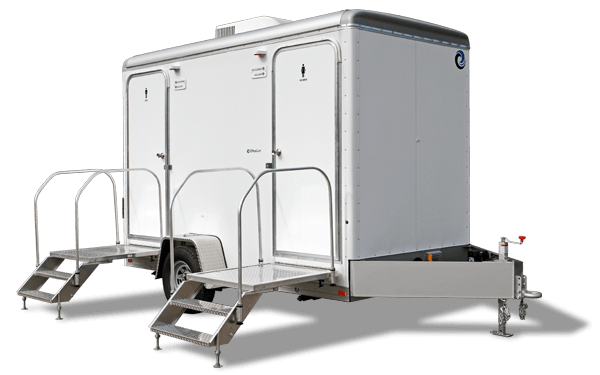
If you want a more comfortable option for all guests, restroom trailers with an ADA-accessible stall are another good choice.
Check State and Local Rules
Some states and cities apply stricter accessibility codes, and event permits may list their own restroom requirements. California’s building code, for example, states the 5 percent rule as a firm requirement with a one-unit minimum. Always confirm with your local permitting office before your event.
Common Mistakes to Avoid
- Counting per site instead of per cluster. Every restroom bank needs its own accessible unit.
- Placing ADA units on grass or slopes. An unreachable unit doesn’t serve anyone.
- Isolating the accessible unit. Keep it with the rest of the cluster.
- Assuming every jobsite is exempt. Visitor and public areas are not covered by the exemption.
- Skipping the signage. Accessible units must display the wheelchair symbol.
Frequently Asked Questions
Does every event need an ADA portable toilet?
If you provide a group of portable toilets for public use, at least one unit in each cluster should be accessible. Even a single-unit event should include an accessible option whenever guests with disabilities may attend.
Can one ADA unit serve my whole event?
Only if all your restrooms are in one cluster of 20 units or fewer. Each separate bank of restrooms needs its own accessible unit.
Are ADA porta potties more expensive?
They usually cost a little more than standard units because they are larger and harder to transport. See our porta potty rental prices for current ranges.
Do construction sites need ADA portable toilets?
Units used only by construction workers are exempt, but areas used by the public, clients, or visitors are not. Many contractors keep at least one accessible unit on larger projects.
Questions to Ask Before You Rent
- How many restroom clusters will my event or site have?
- How many standard units are in each cluster?
- Is there firm, level ground and a clear path for each ADA unit?
- Do I need accessible handwashing stations as well?
- Does my local permit or state code add any extra requirements?
So, How Many ADA Portable Toilets Do You Need?
- At least 5 percent of units in each cluster, rounded up.
- Never fewer than one accessible unit per cluster.
- Units used only by construction workers are exempt, but public and visitor areas are not.
Need help planning accessible restrooms? VIP Restrooms supplies ADA-compliant portable toilets for events and jobsites nationwide. Share your guest count, layout, and event type, and we’ll help you plan the right mix of standard and accessible units. Request a Free Quote or call (888) 437-0062.
This article is general guidance, not legal advice. Confirm requirements with your local authorities and the current ADA Standards.